



Mobile Game Environments
Low draw count, compressed texture formats, and a design discipline that creates readable spaces within a tight polygon budget.
The fastest way to discover that your 3D environment was built without performance in mind is the GPU profiler. Not the art review. Not the playtest. The profiler, at the point where fixing it is expensive, and postponing the launch is the alternative. Draw calls from non-batched static meshes. Overdraw from layered foliage that looked correct in the editor. Lightmap resolution on assets is never closer to the camera than fifty meters. At Cobweb Games, our 3D environment design services are built with the performance budget in the same document as the art direction brief. We do not produce environment art that requires a separate optimization pass. We build it optimized.
We are a dedicated 3D environment art studio for game projects across Unity, Unreal Engine, and proprietary pipelines. Stylized and realistic environments, open worlds, interior scenes, and modular environment systems for mobile, PC, console, VR, and AR.
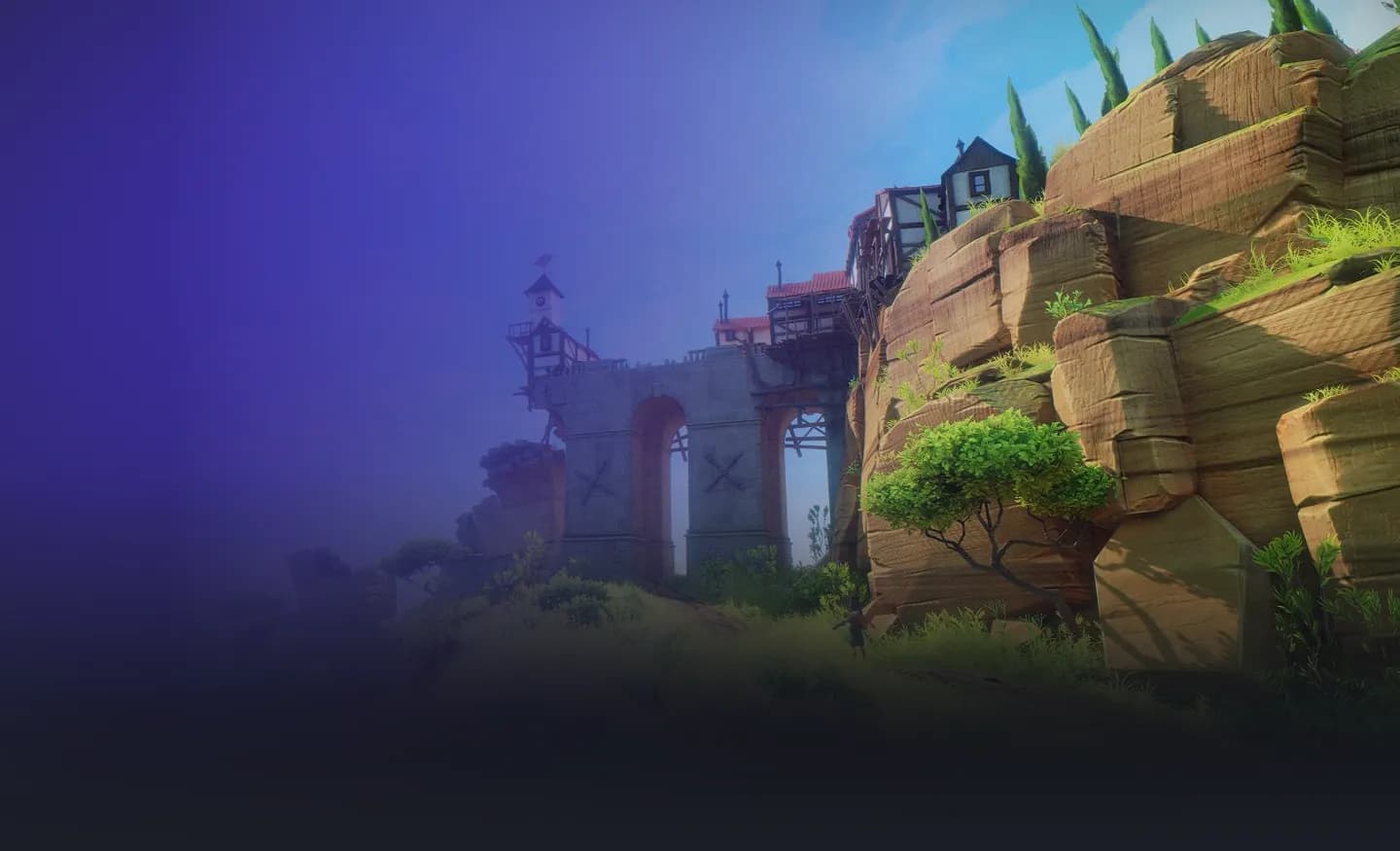
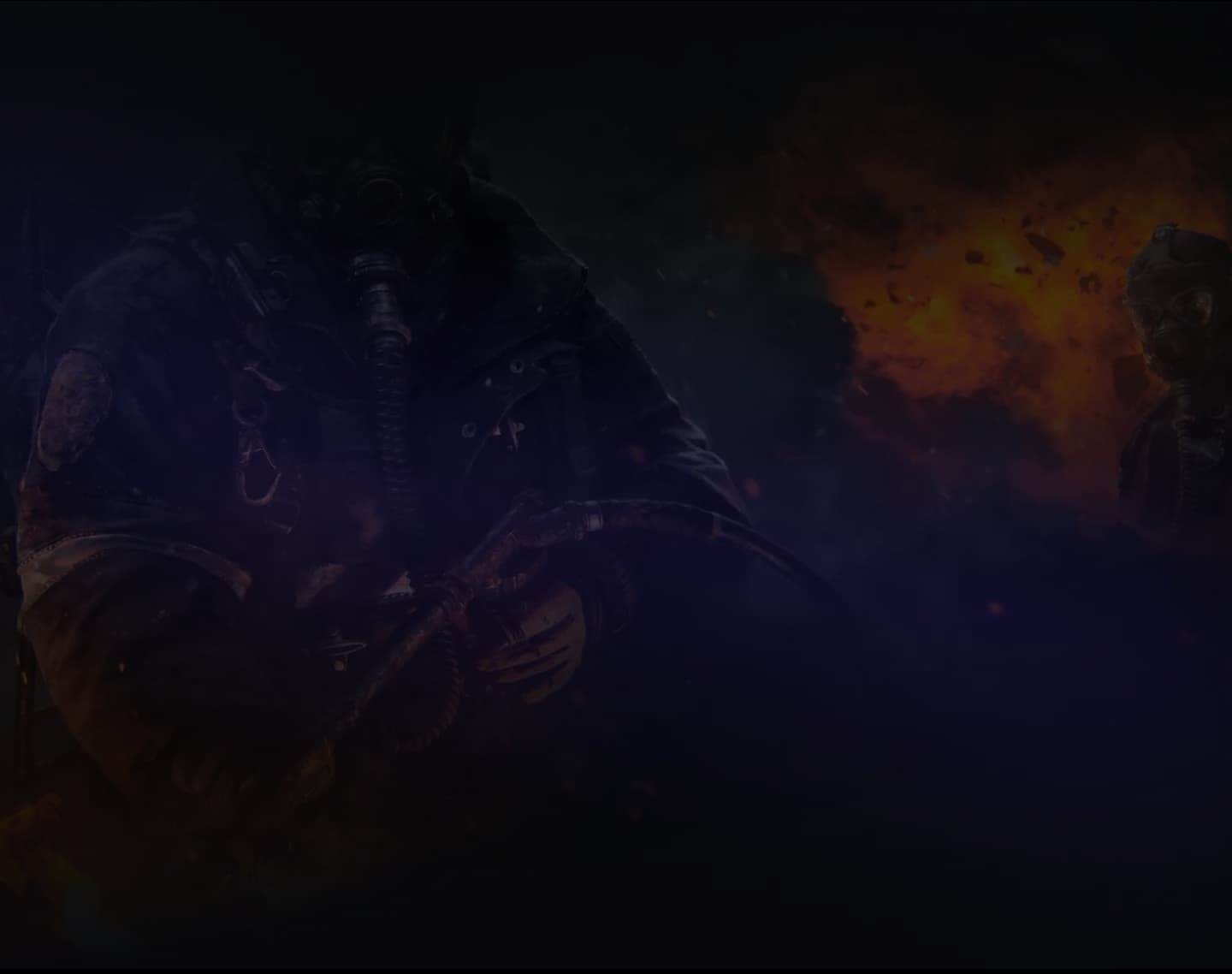
Every environment we build is designed for the gameplay it needs to support and the hardware it needs to run on.
Production-quality environment modeling built to the poly budget established in the pipeline brief. Not approximated and optimized later. Built to budget from the first mesh.

Stylized game worlds with consistent visual language and the specific technical requirements that stylized art actually demands. Stylized is not lower quality. It is differently demanding.

Realistic 3D environments with PBR material accuracy, photoreference-calibrated lighting, and surface detail appropriate to the camera distances the game uses.
Open world environments with distance LOD systems, streaming region planning, and the LOD chain management that open world scale demands. Art that works when the camera is anywhere in it.

Art implementation for level design blockouts. Production art placed to maintain the spatial relationships and gameplay affordances the level designer established.
Terrain modeling, material blending, foliage within the draw call budget, and biome transition zones that determine whether the world reads as coherent or tiled.

Modular environment kits designed for maximum visual variety with minimum draw call cost. The system is designed for reuse from the first piece, not discovered as inadequate on the fourth application.
Environmental props, furniture, debris, and the supporting cast that make a game world feel inhabited. Consistent scale. Named to your convention.

PBR material authoring in Substance Painter. Tileable texture sets for surfaces. Unique passes for hero assets. Material variants within shared atlases where the budget rewards it.
Lighting that serves gameplay readability and visual tone simultaneously. Baked at the resolution the asset's screen footprint requires, not applied as a default setting.
Draw call reduction, occlusion setup, texture streaming configuration, and LOD chain validation. The technical layer that keeps environment art from becoming the performance conversation.
Assets that pass engine import cleanly, integrate with the existing material system, and perform within the frame budget the game's minimum spec requires.

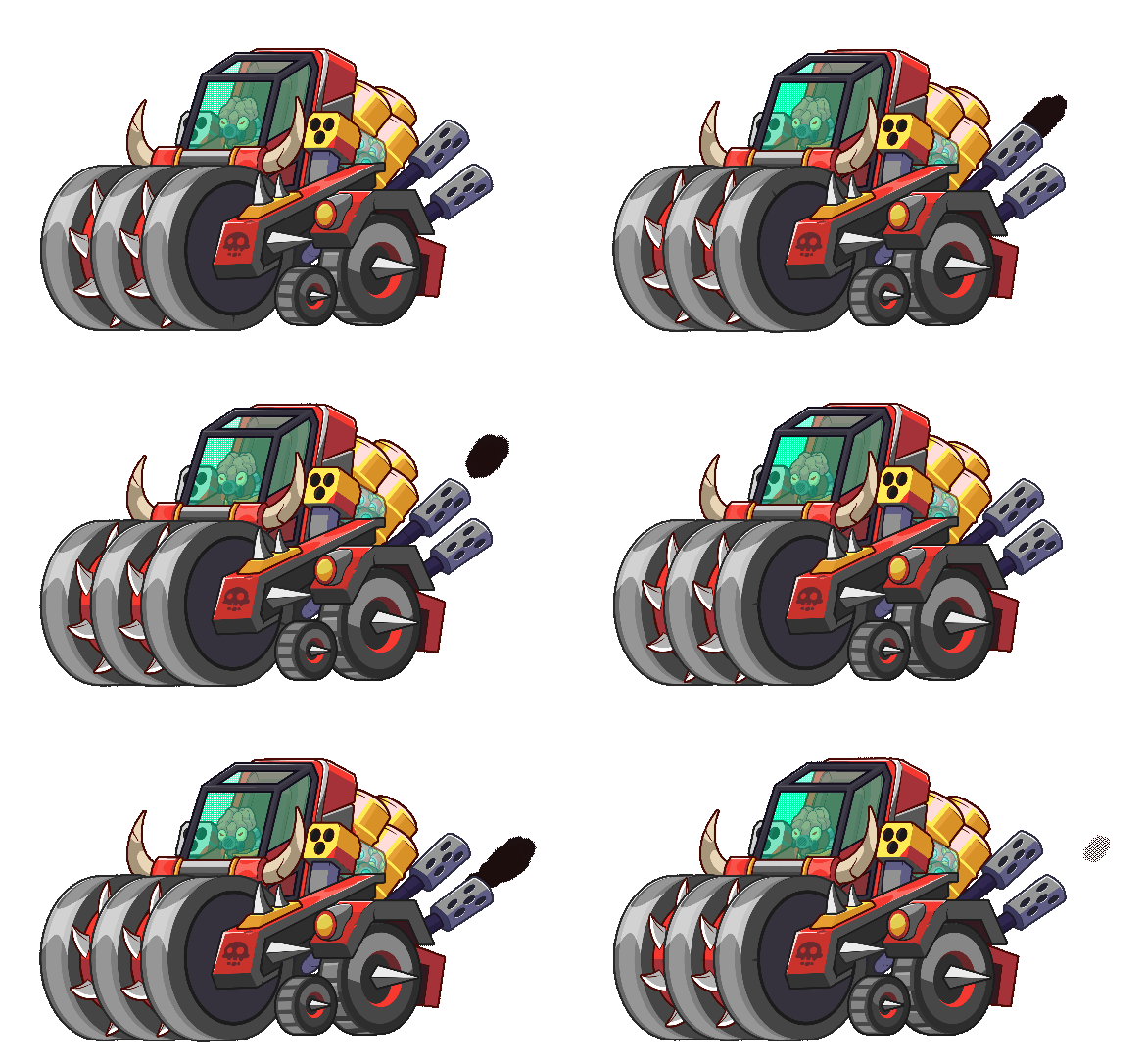
Fantasy worlds, sci-fi environments, medieval settings, urban cities, natural landscapes, industrial spaces, interior scenes, exterior environments, post-apocalyptic worlds, and stylized game worlds across every visual register. If the game world needs it, we have built it.

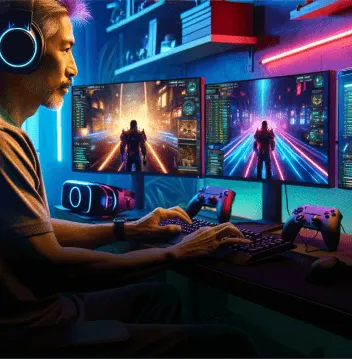
Low draw count, compressed texture formats, and a design discipline that creates readable spaces within a tight polygon budget.

Higher detail density, complex material layering, and environment art that rewards the player who looks at a monitor rather than a phone screen.

VR environments at the frame budget for stereoscopic rendering require. AR environments with the scale accuracy and real-world overlay demands.
Console-targeted environment art within the memory budgets and certification requirements of current-generation hardware.
Virtual world environment design to platform-specific technical specifications, which differ from standard game engine requirements.
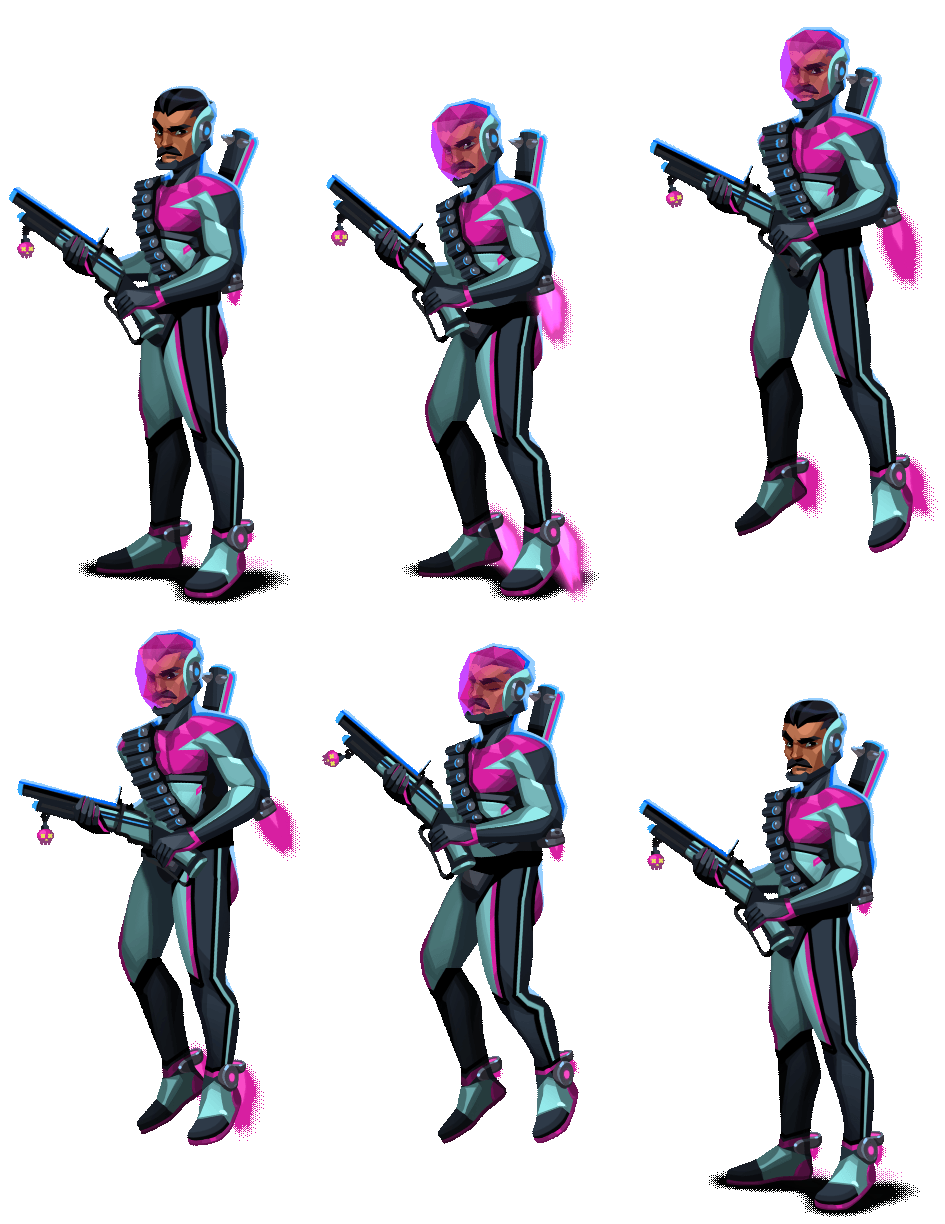
Visual and technical direction across all environment projects.
3D environment modeling, asset production, and world-building specialists.
Blockout creation and gameplay-spatial integration support.
Scene lighting, atmosphere, and bake optimization.
PBR material authoring and environment texture production.
LOD management, optimization, pipeline integration, and engine QA.
Engine import testing, performance validation, and delivery checklist.
Our Technology Expertise in 3D Character Modeling.







We outsourced environment art to Cobweb for a PC open world. The first question they asked was our frame budget per scene, not what we wanted it to look like. The environment art had zero performance remediation during integration. The first time that has happened with external environment art on any project I have produced.

I needed stylized mobile environments within a tight draw call budget. Cobweb built performance into the brief from the first session. I shipped with the environment art contributing three draw calls per scene. I had budgeted eight.

3D environment design covers all visual elements forming a game world: terrain, buildings, props, vegetation, lighting, and atmosphere. It determines what a player sees when they look at the world they are playing in.







 Design Rush
 Clutch