



Android
Vulkan rendering with honest device-tier scalability.
Unreal Engine 5 will happily render a photoreal canyon at cinematic fidelity, and it will just as happily let an inexperienced team ship that canyon at 14 frames per second. Nanite and Lumen are not quality settings you switch on. They are architectural decisions with budgets attached, and the studios that treat UE5 like a screenshot generator find that out at the GPU profiler, at midnight, three weeks before launch. Cobweb Games is an Unreal Engine game development company that builds with the engine's power and inside its budgets, which is the only combination that ships. We provide full-cycle Unreal Engine development: custom UE5 games, multiplayer infrastructure, porting and optimization, engine migration, AR/VR, and dedicated Unreal developers who work in C++ and Blueprint like it is one language, because in practice it is.


Unreal Engine development across every discipline a game production requires.

Original titles built from concept in UE5, with rendering, gameplay, and content architecture decided against your platform targets from the first design review.

Discovery through LiveOps under one roof. The team that prototypes your core loop is the team that answers the certification checklist.

UE5 development where Nanite, Lumen, and World Partition are used because the project needs them, budgeted from day one, and profiled continuously rather than admired occasionally.

Unreal's replication system, dedicated servers, and Epic Online Services or Steamworks integration, architected in week one. Networking retrofits in Unreal are how budgets die.

Titles ported into and across Unreal platforms with the rendering pipeline, input layer, and memory budget rebuilt for the destination hardware.

Profiler-driven rescue work for UE projects with frame problems: draw call audits, shader complexity passes, Nanite and Lumen budget corrections, and streaming fixes at the cause.
UE4 to UE5 migrations and version upgrades handled with deprecation audits and staged testing, so the upgrade improves the project instead of archaeologically destroying it.
Meta Quest and PC VR development where the frame budget is sacred. Dropped frames in a headset are a health issue, not a performance note.
Sequencer-driven cinematics, in-engine trailers, and virtual production workflows at the fidelity UE5 was built to deliver.
Senior UE engineers embedded in your team, fluent in your codebase within the first sprint, without the half-year hiring search.


Send the concept and the visual target. We will tell you what the production honestly requires. Itemized estimate with milestone plan within 48 hours. NDA signed first. Senior UE engineers in your repo within a week. Stop fighting the engine. Start shipping with it.


Vulkan rendering with honest device-tier scalability.

Metal-optimized builds through App Store submission.

DX12 with the full scalability spread PC demands.
Apple Silicon native builds where the market justifies them.
PS5-optimized development with certification in scope.
Series X/S builds through the full cert process.
UE on Switch, scoped honestly against the hardware envelope.
Steamworks integration: achievements, workshop, multiplayer.
EGS launches with Epic Online Services wired in.
Standalone VR at the frame discipline the platform enforces.
Senior UE engineers with shipped titles behind them.
Feel-obsessed systems programmers in C++ and Blueprint.
Shader, VFX, and pipeline specialists guarding the frame budget.
World-builders fluent in Nanite-era asset discipline.
Modelers and MetaHuman specialists with rig-aware topology habits.
UMG interface designers building for controller, mouse, and touch.
Platform-cert-aware testers with actionable reproduction steps.
Milestone owners and your single point of contact.
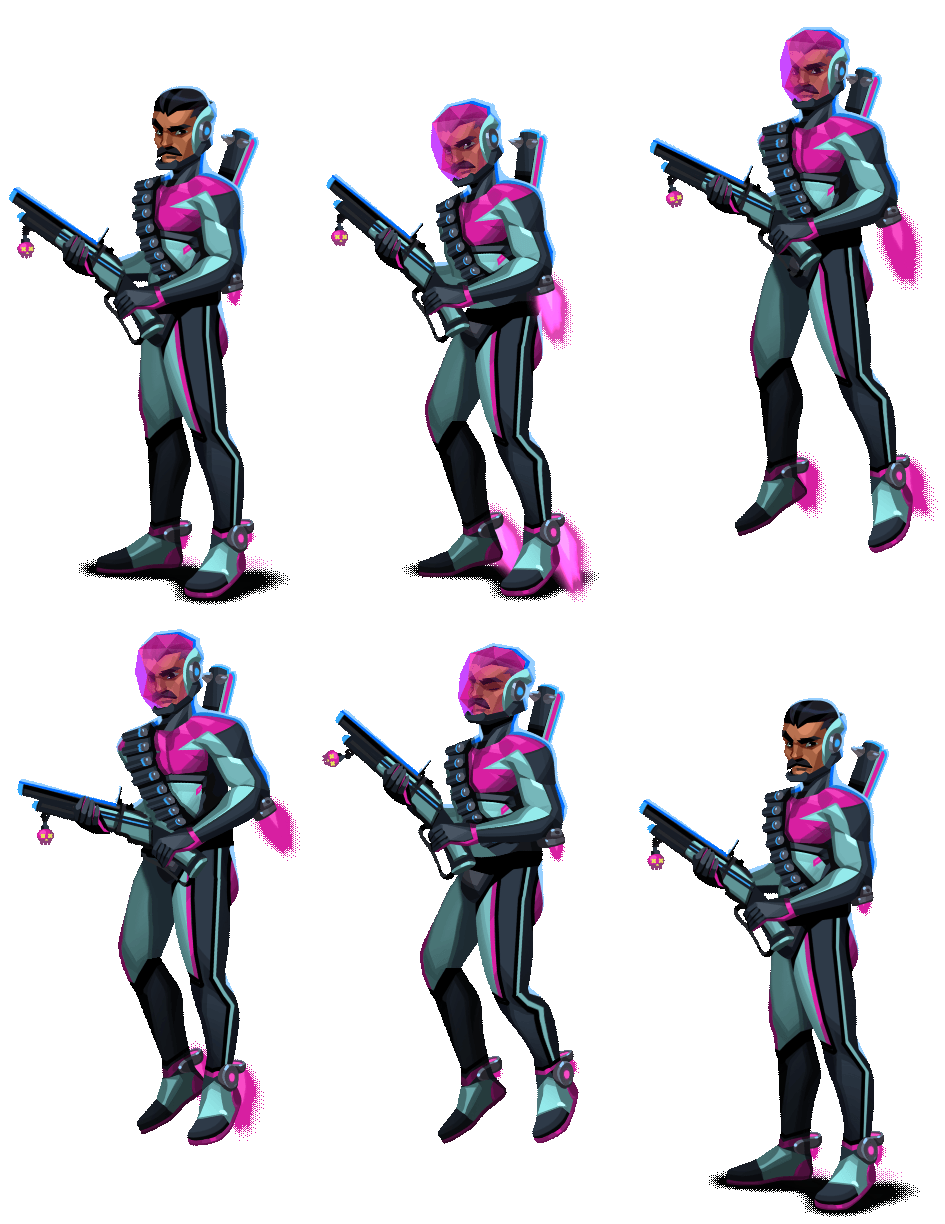
Our Technology Expertise in 3D Character Modeling.






Our UE5 open world ran at 22fps in the editor demo the previous vendor called 'nearly optimized.' Cobweb's audit found unbudgeted Lumen settings, a Nanite scene with no coarse representation strategy, and streaming volumes drawn by someone who had clearly never opened the profiler. Eight weeks later, we were at a locked 60 on Series X. Certification passed first attempt.

We hired three dedicated Unreal developers from Cobweb for our multiplayer FPS. They rebuilt our replication layer around Epic Online Services and cut our bandwidth per player by 40%. Our netcode complaints on Steam went from a daily flood to a rare event.

Cobweb migrated our UE4 title to UE5 without breaking a single live system. They audited every deprecated API before touching the project, staged the migration across three test branches, and shipped it in an update our players noticed only because the lighting got better. That is what a migration is supposed to look like.
Choose Unreal when the visual ceiling, open-world scale, or built-in multiplayer replication justifies the heavier engine. Choose Unity for lighter builds, faster mobile pipelines, and broader low-end device reach. We recommend the engine that fits the project, not the one we are most comfortable in.






 Design Rush
 Clutch