



iOS
Builds tested on current iPhones and prepared for App Store submission.
You have a mechanic that feels good under your thumb: a color sort, a screw that twists free, a block that snaps into a line. Hybrid casual game development is the work of turning that single satisfying action into a game with levels, progression, and a reason to open the app tomorrow, and it starts with a playable test that tells you if the mechanic deserves the next dollar. Cobweb Games builds that test first. We prototype the core puzzle, produce a representative level set with the tools to make hundreds more, and hand you a working build plus a production scope grounded in what players did with it.

Build around the puzzle, then expand. Sort, screw, and block puzzles share a screen size and very little else.

Controls, objectives, fail states, and a small playable loop, built fast so you can watch real hands play it. Our game prototyping process keeps the first build small enough to change and solid enough to extend.

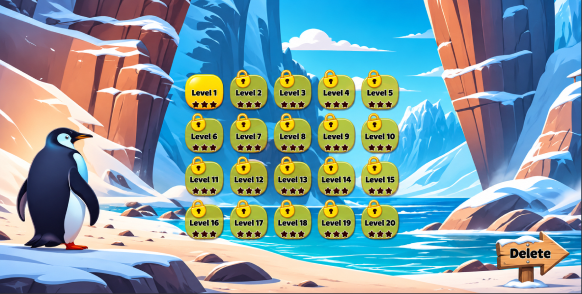
A representative level set plus a level editor your designers can use, with obstacles, review criteria, and a difficulty curve mapped before level 50 exists.

Unlocks, collections, and meta goals that grow out of the core puzzle. This layer turns a ten-second loop into a reason to come back next week.

Rewarded ads and in-app purchase flows you approve, including failed payments and restored purchases. We build the plumbing properly. Revenue depends on your game, your audience, and your market.

Readable boards, touch feedback that lands, and a clear visual hierarchy, all with original assets. A puzzle the eye cannot parse in one second is a puzzle nobody finishes. Our game art team covers the full asset set.

Tutorial completion and level events wired into your analytics, plus device testing that supports a controlled soft launch. Game testing runs on the hardware your players own.
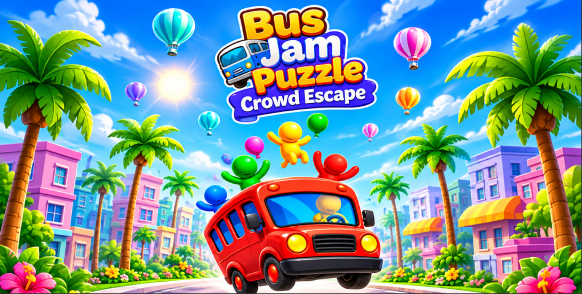
Color and item sorting lives on clean readability and an honest move budget. Level design controls how many colors, containers, and blockers appear and when. Our own Bus Jam Puzzle runs on this logic.
Screw and pin puzzles depend on layered parts and physics players can predict. The design challenge is making a heap of metal read as a solvable problem.
Grid placement, line clears, and piece generation. Fairness in the piece sequence matters more than any particle effect.
A new mechanic, or a familiar one with a twist, prototyped on its own before the game around it gets designed. Item-combination concepts belong with our merge game development team, and tile-matching games have a dedicated match-3 game development service.

What should players do, and what question should the first prototype answer? Tell us the platform, your current stage, any build or reference links, and your next milestone. Budget and timing are optional.


Builds tested on current iPhones and prepared for App Store submission.

Builds tested across the device spread your players carry, through Google Play release.

Unity game development for fast iteration, broad device reach, and mature ad and analytics SDKs.
Owns the rules, the level set, and the difficulty curve.
Builds the mechanics, the level editor, SDK integrations, and save logic.
Makes the board readable and every tap feel rewarding.
Tests devices, purchase flows, and level regressions before every release.



Cobweb was the first studio that asked about our pipeline before they asked about the brief. Every asset they delivered integrated cleanly on the first import. That had not happened before on an outsourced production.

The environment art they delivered had zero performance issues in the build, and the visual quality matched the concept art exactly. No notes from the art director on the first submission. For an external team working from a reference they had not produced, that is not the typical outcome.
From early prototyping through worldwide launch, Cobweb Game drove our indie game from idea to finished product. Their development expertise and detailed feedback helped refine our game design at every stage. Moreover, their professional project management and programming allowed us to realize our vision on an expedited timeline and budget. We could not be happier with the development services or the successful final product.

Cobweb Games has been an absolute pleasure to work with! Their creativity and attention to detail are unmatched. The team was highly responsive to our feedback and delivered a game that exceeded our expectations. We can't wait to collaborate on our next project.
Yes. A prototype covers the core mechanic and a small representative level set, enough to test feel and difficulty. Production art, full progression, and monetization come after you have seen it played.





 Design Rush

 Clutch
